About the Project
Overview
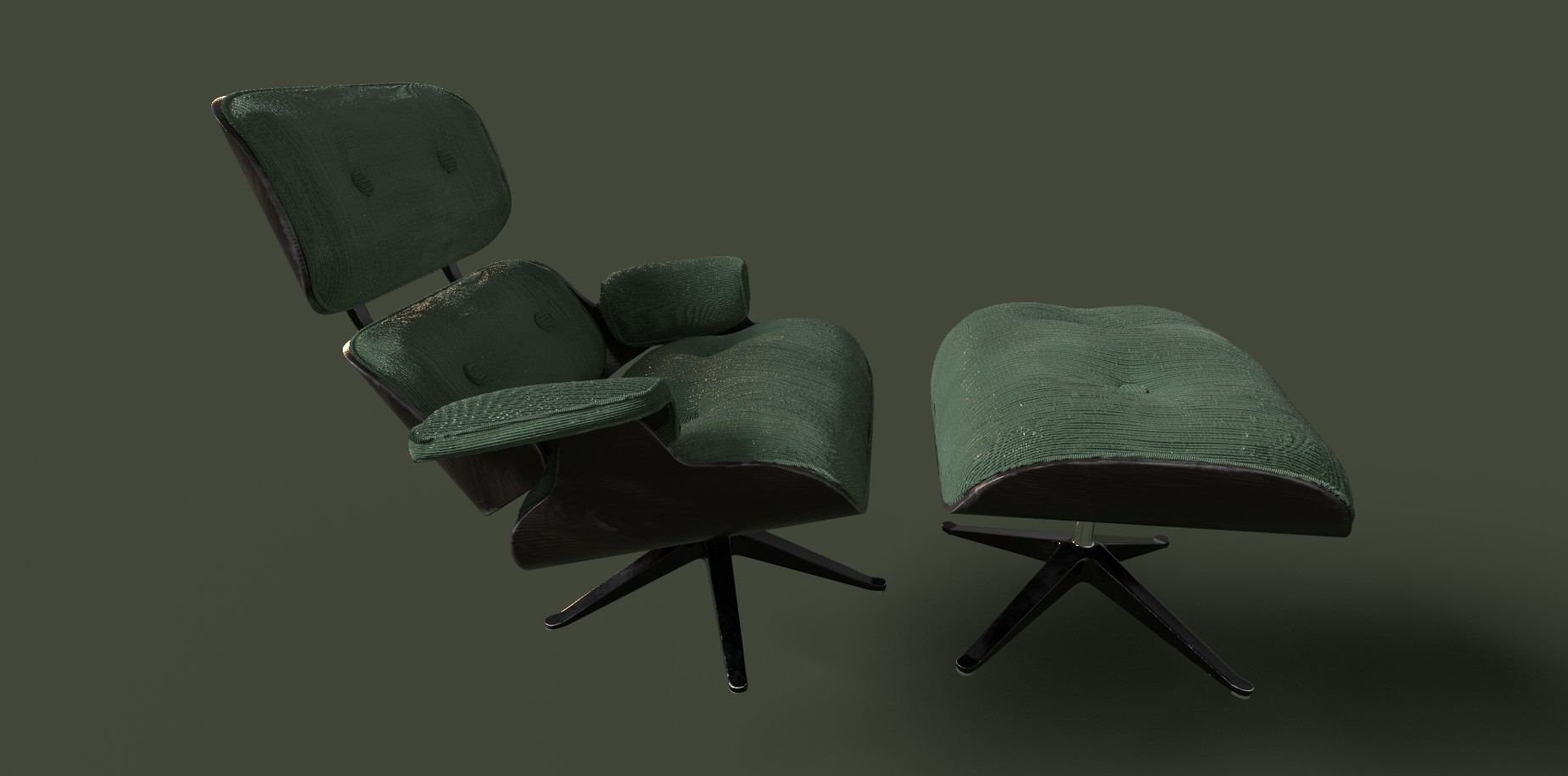
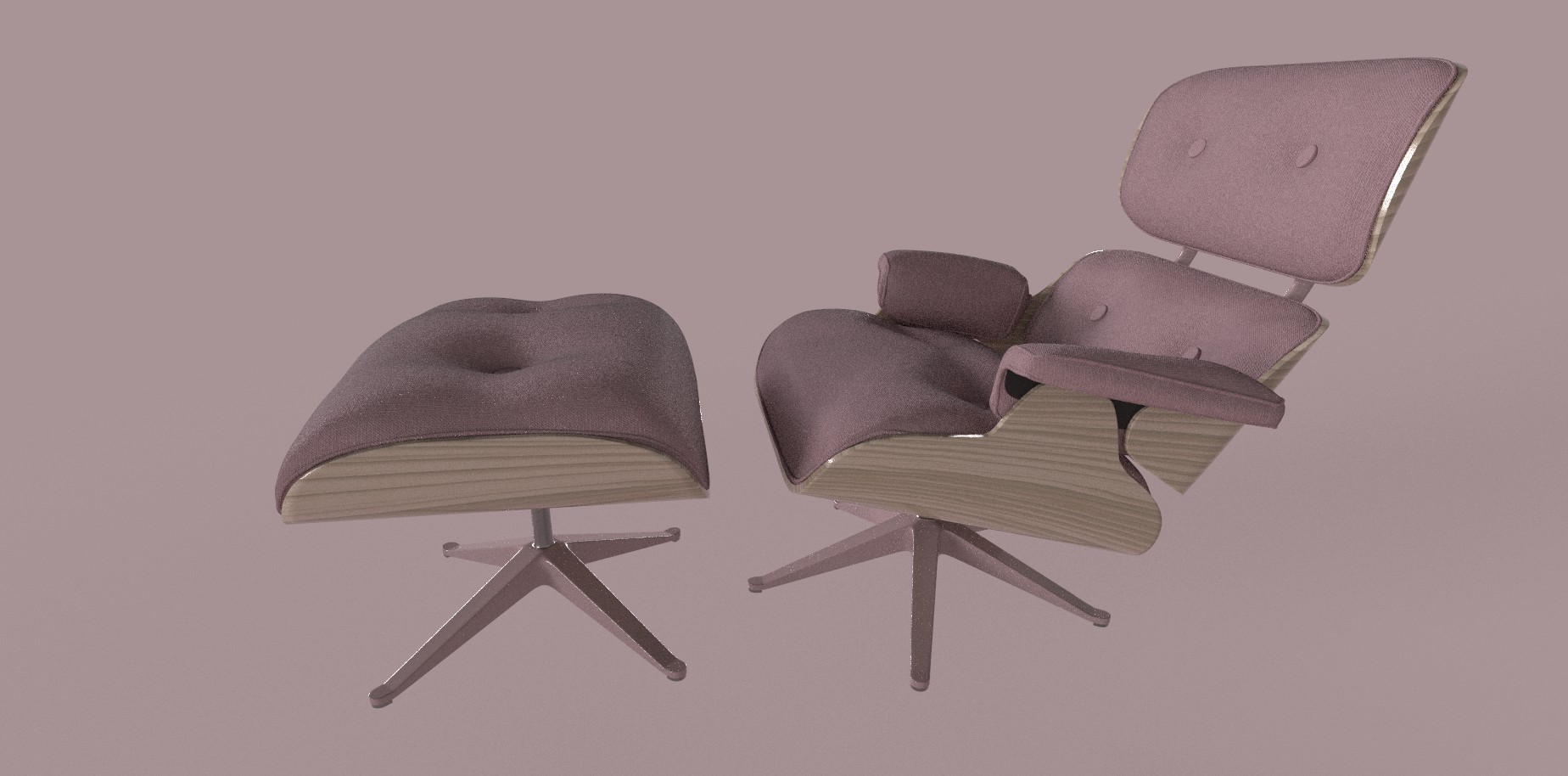
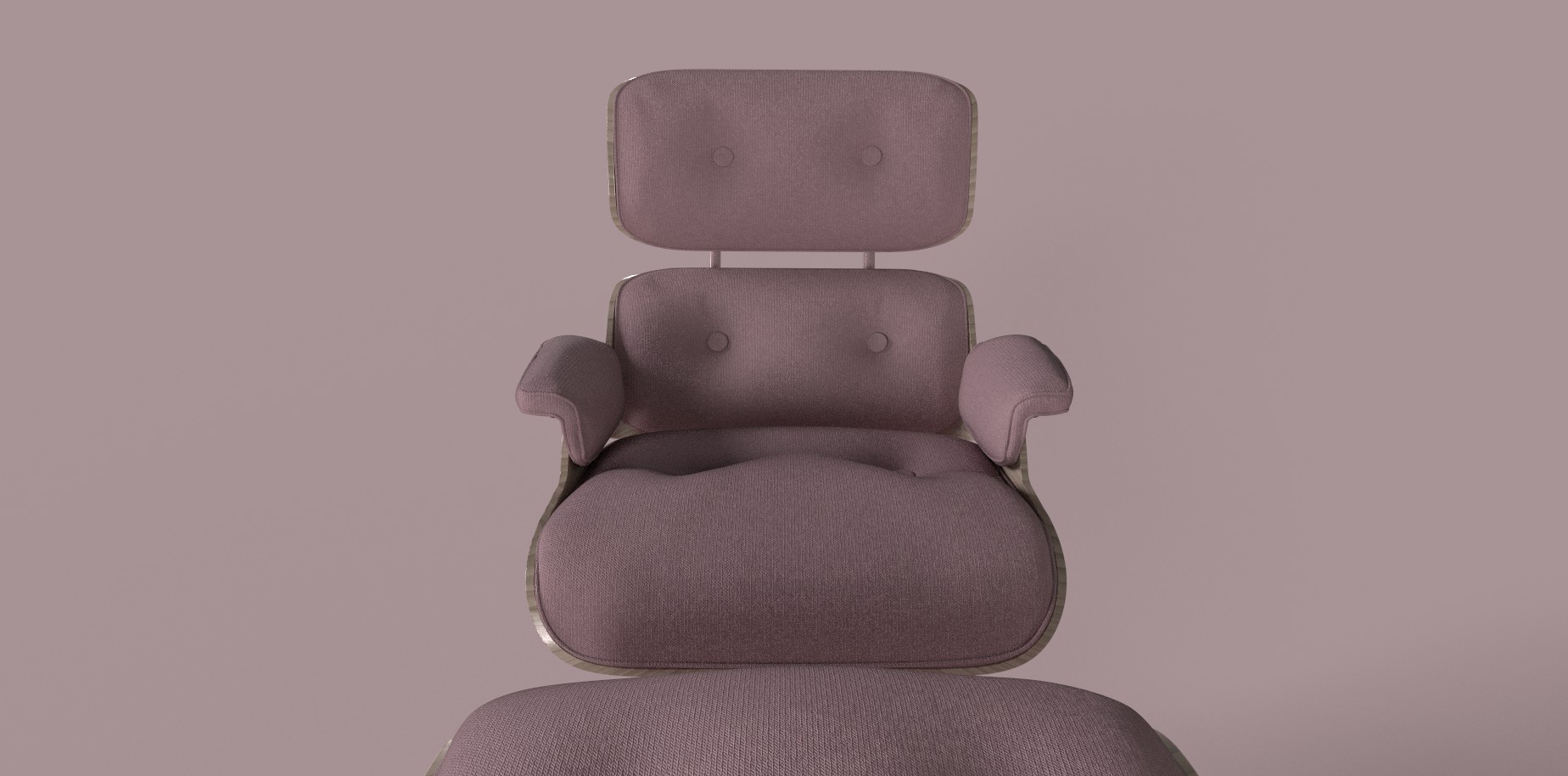
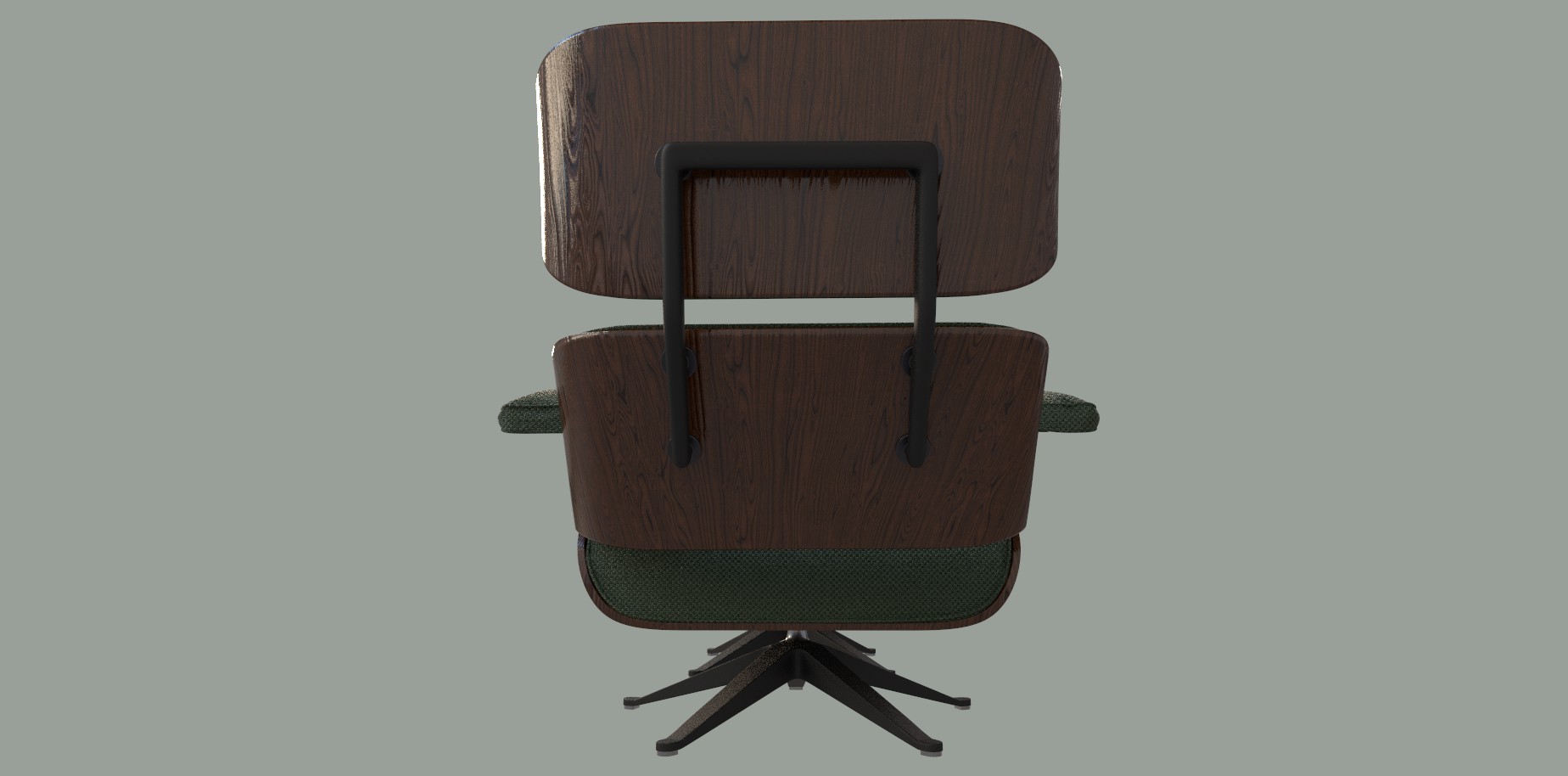
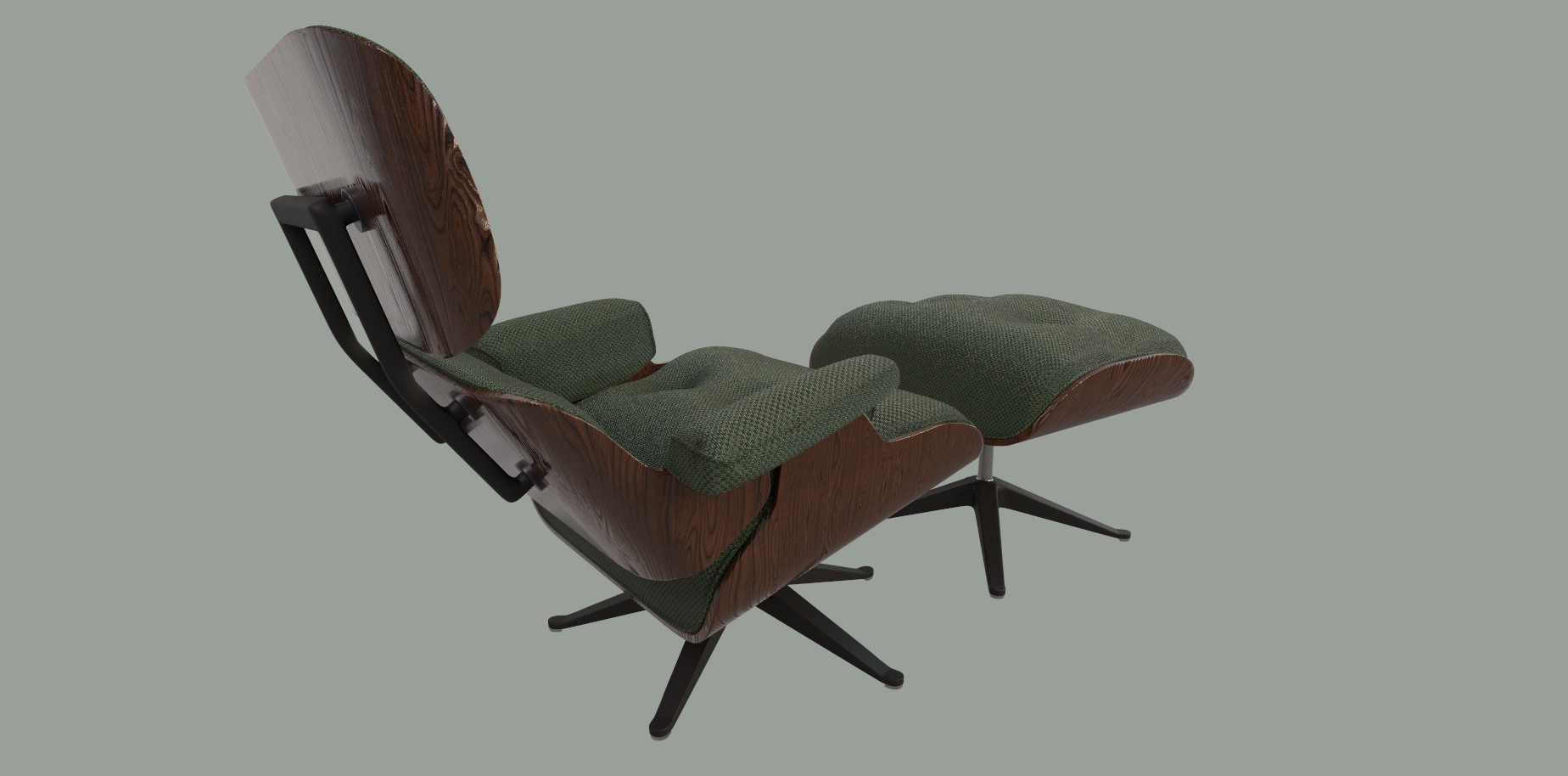
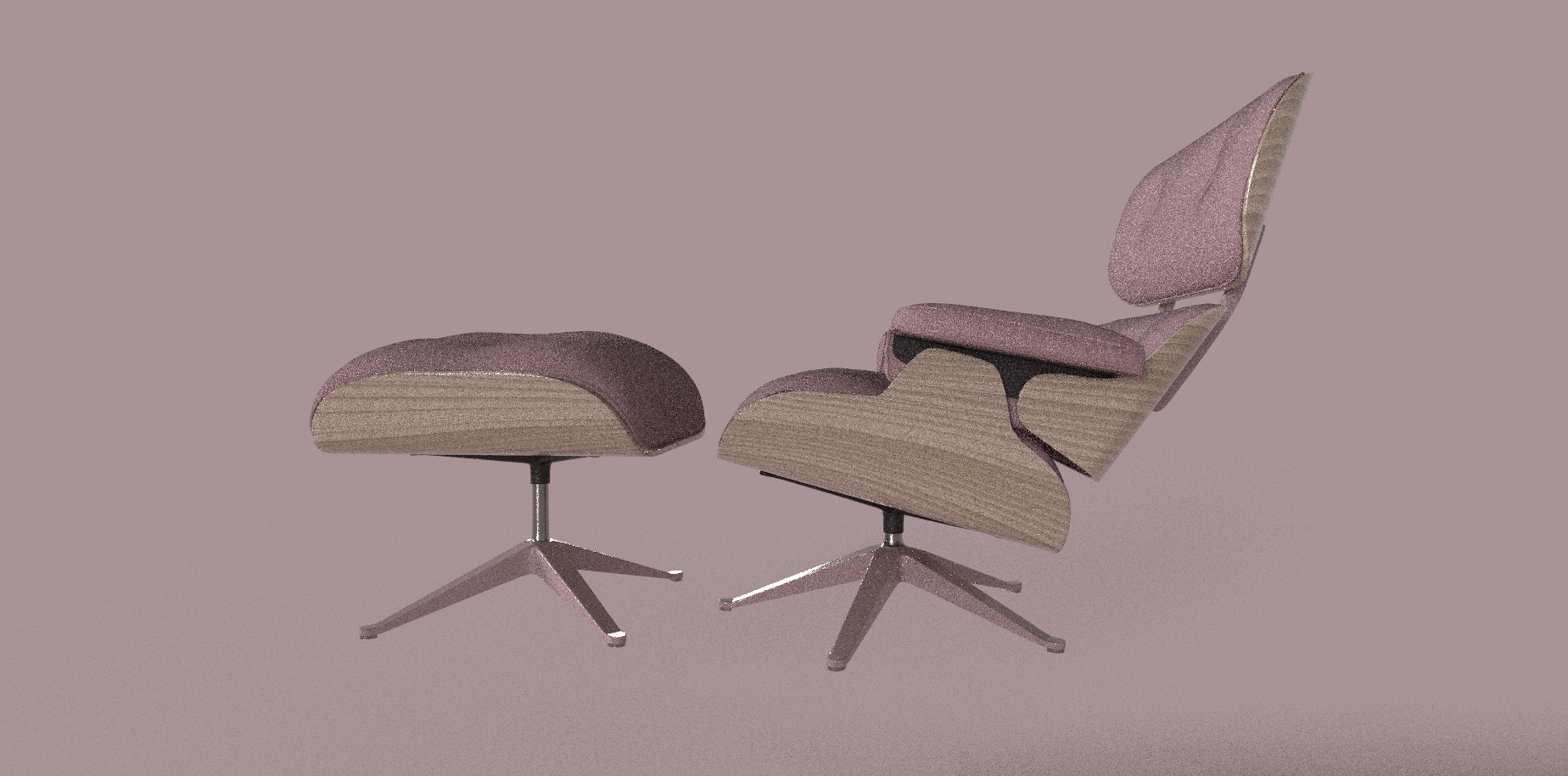
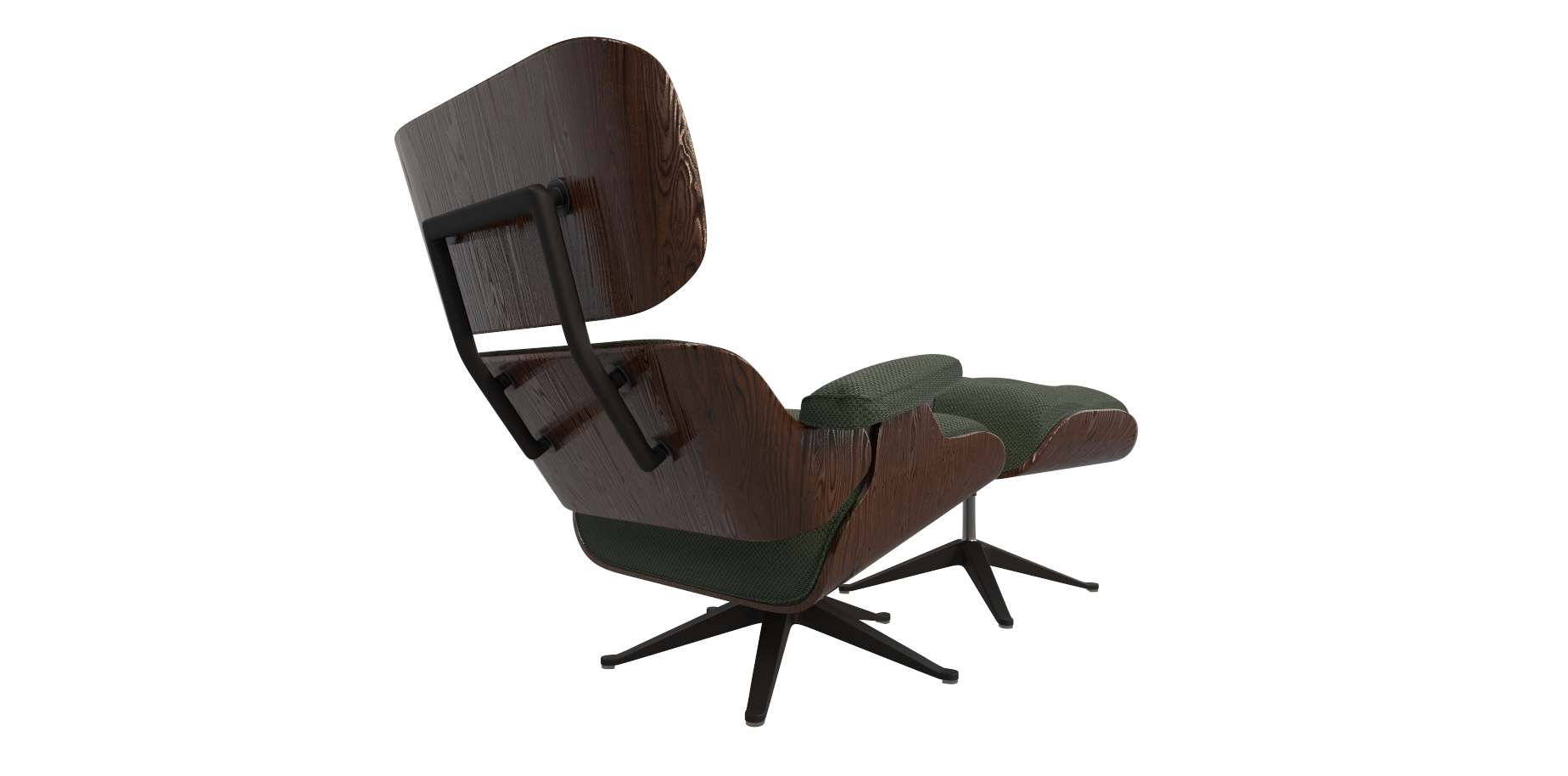
This project is a technical deep dive into cloth simulation, using a classic mid-century modern lounge chair as the canvas. The goal: push Blender's cloth physics to achieve production-ready upholstery behavior. The chair is both a standalone simulation showcase and a hero asset for a larger living space diorama.
Cloth Physics Workflow
The cushions were generated in through Blender's cloth physics engine.
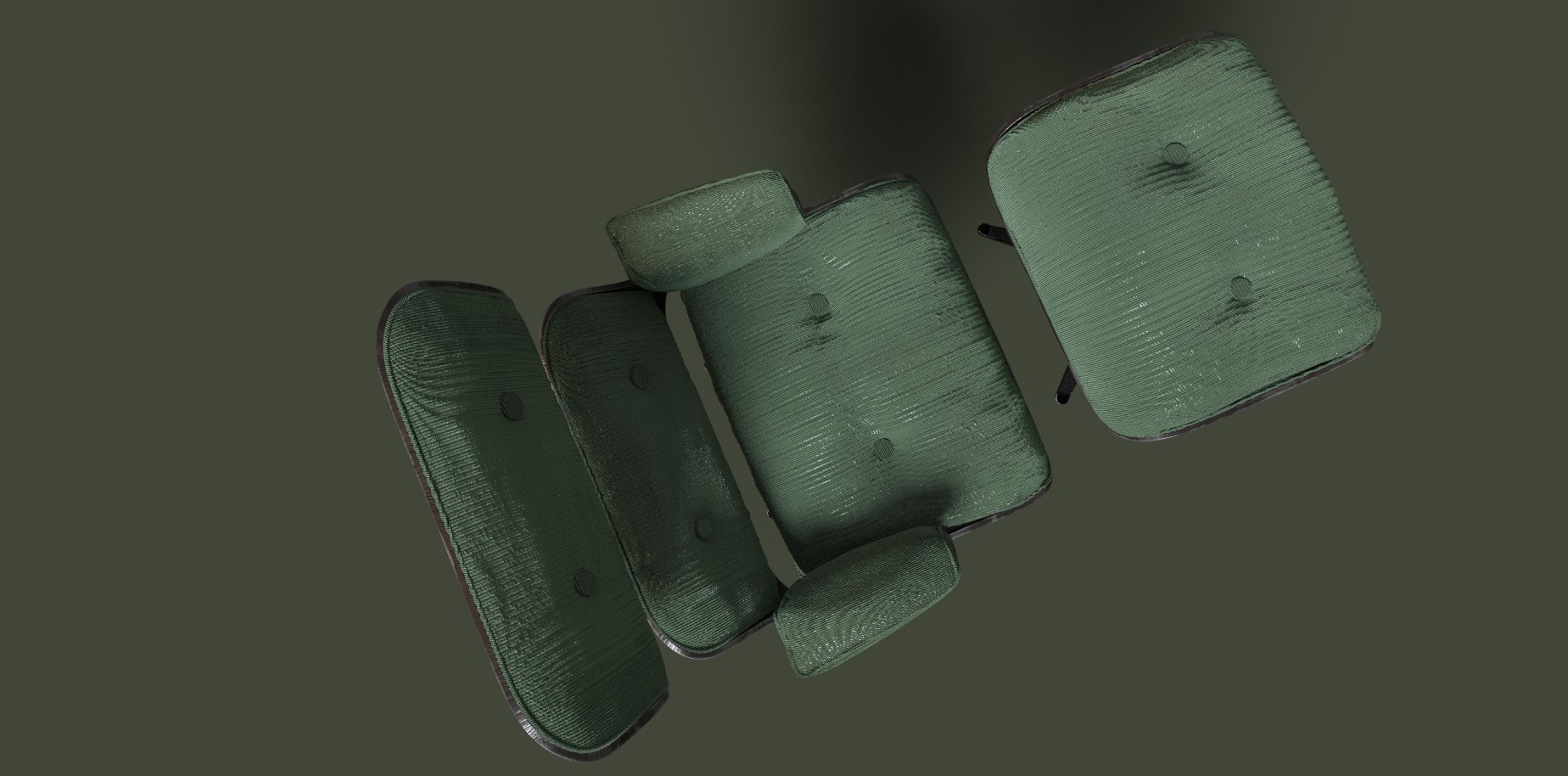
- Pressure Physics: Inflated cushions using Blender's pressure gradient system for plush volume and natural "squish."
- Seam Constraints: Vertex groups mapped to stitch lines created realistic tension points and micro-wrinkles.
- Material Tuning: Iterated bending resistance, damping, and stiffness to mimic genuine leather behavior.
- Collision Handling: Multi-layer detection ensured realistic cushion-to-base and cushion-to-cushion interaction.
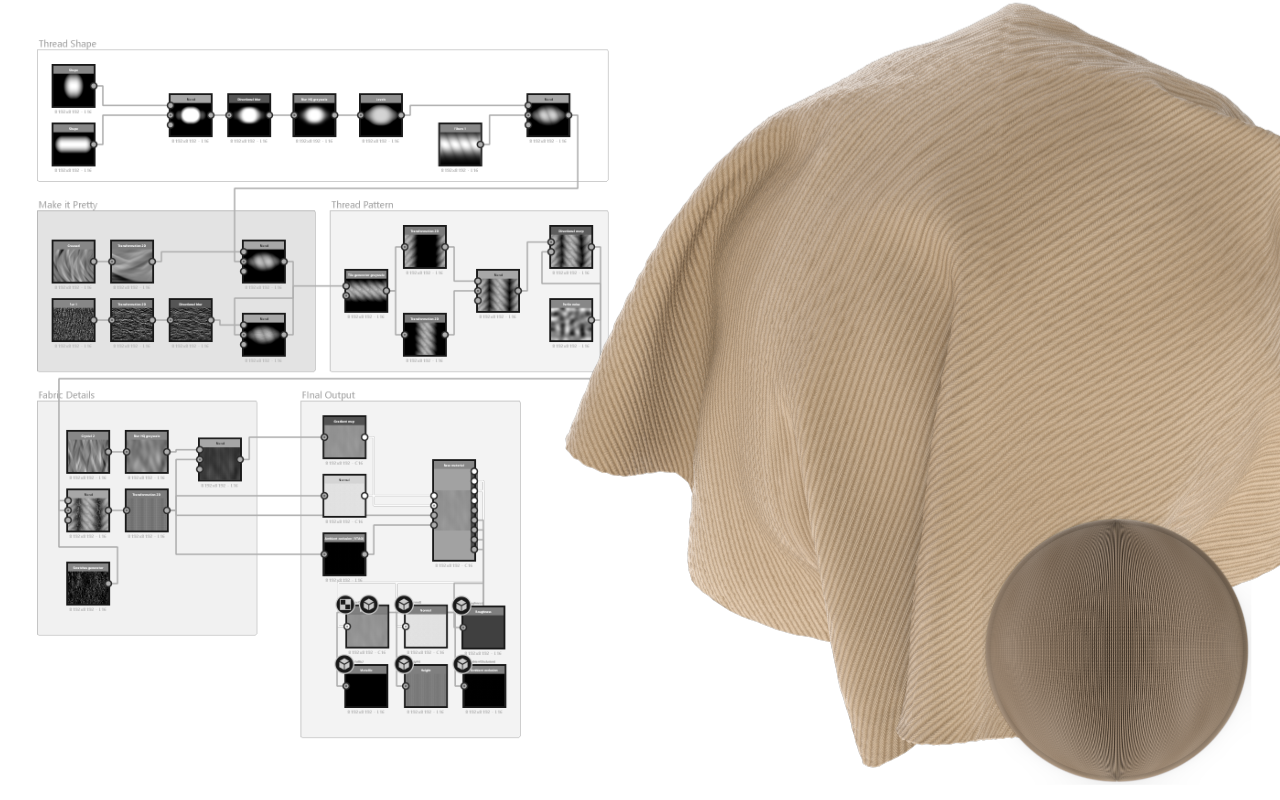
Materials Built From Scratch
All materials were created procedurally in Substance Designer — no stock presets.
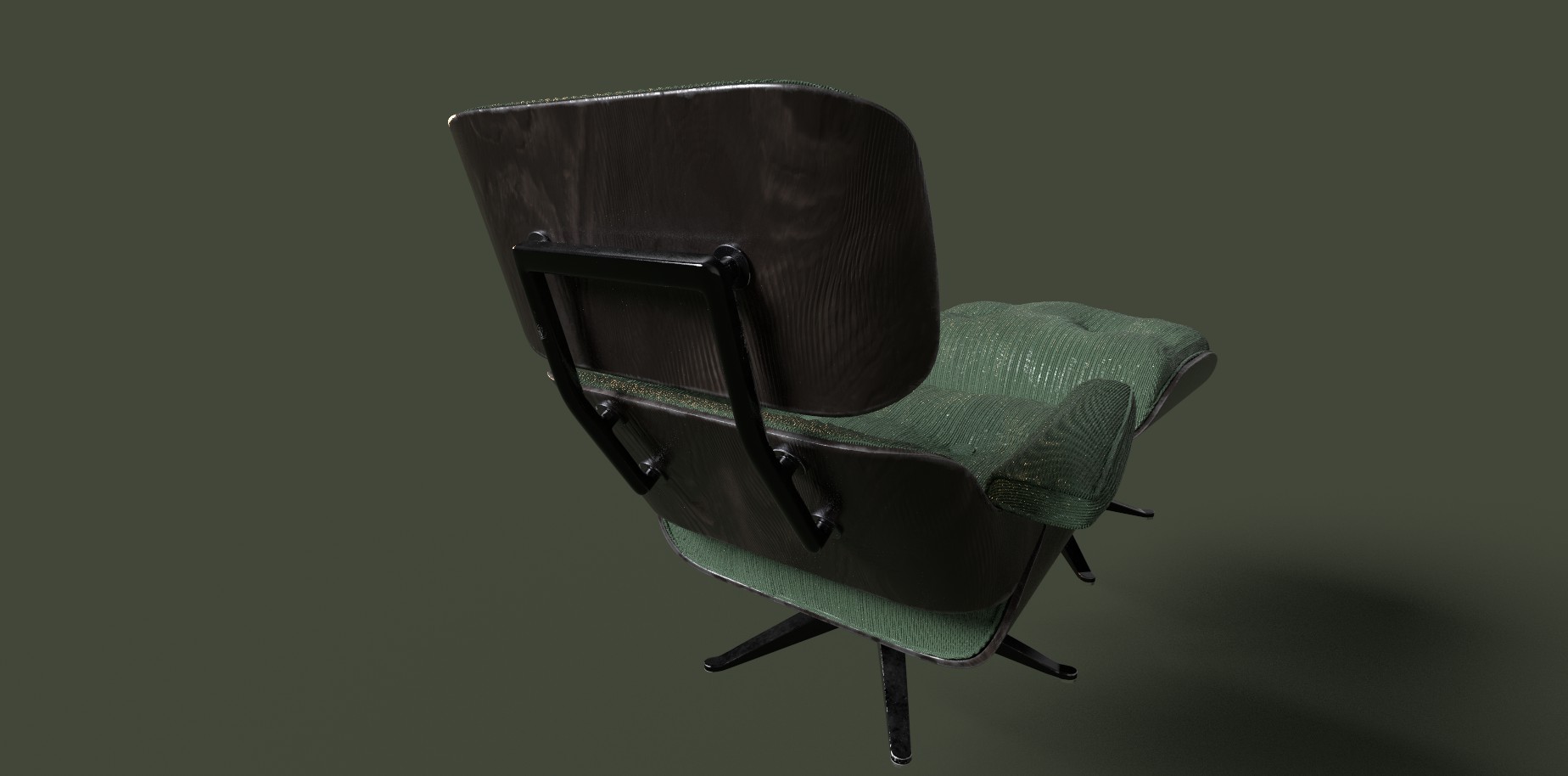
- Upholstery Fabric (Chenille): Custom-woven chenille created entirely procedurally. Built using gridded coordinate systems with distinct warp and weft threads, then layered with directional noise to achieve the soft, fuzzy pile characteristic of chenille. Micro-fiber details added for close-up realism.
Industry Pipeline: UDIM + ID Maps
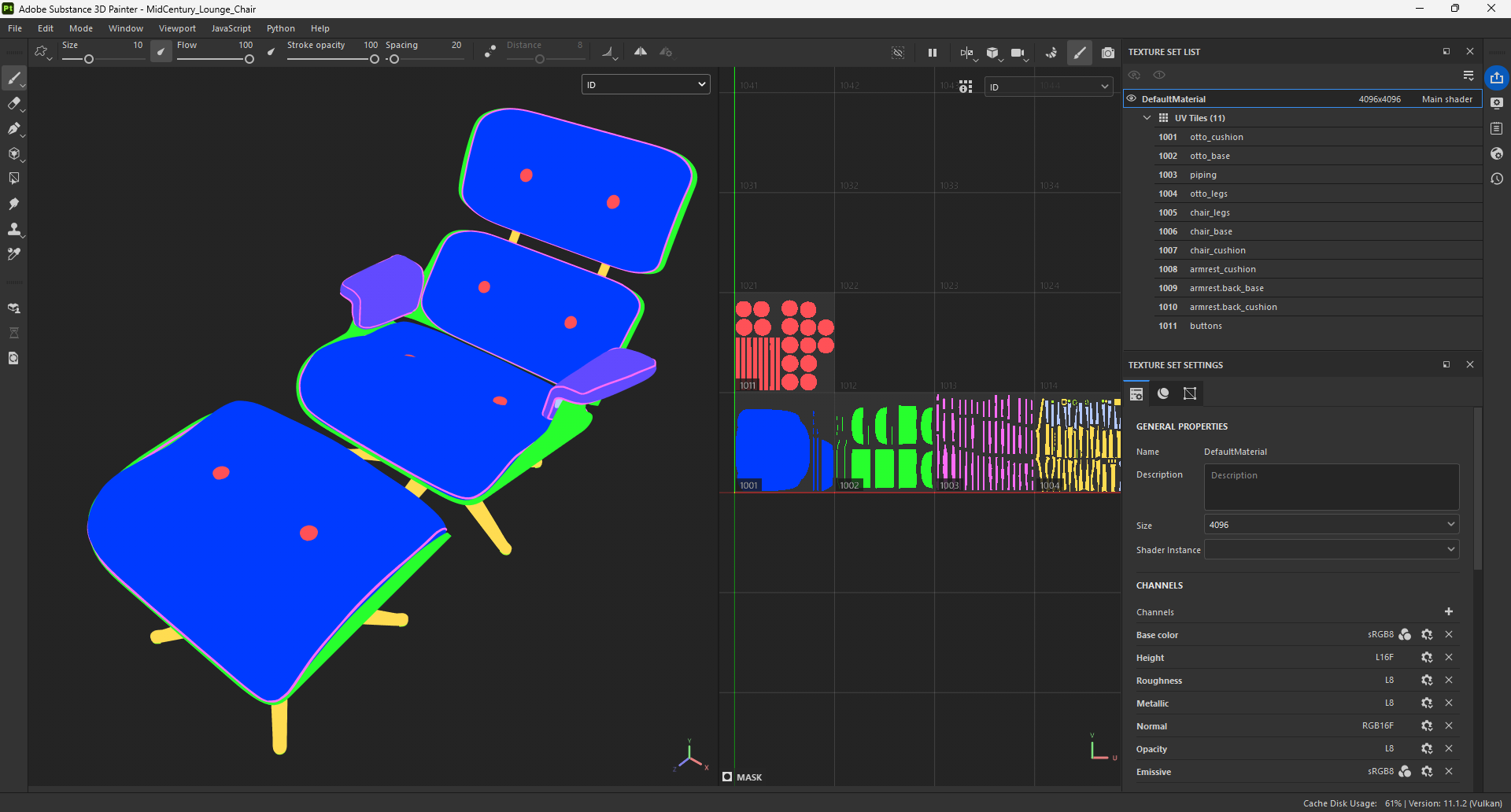
- UDIM Workflow: Multiple tile sets ensured consistent texel density across cushions, wood, and hardware — holding up at any camera distance.
- ID Maps: Generated from Blender mesh for one-click material assignment in Substance Painter. Red (fabric), Green (wood), Blue (metal) — mirroring AAA pipelines.
- Final Detailing: Custom wear, stitching, and micro-abrasions hand-painted. Procedural generators added edge wear based on curvature and AO.
Technical Challenges Solved
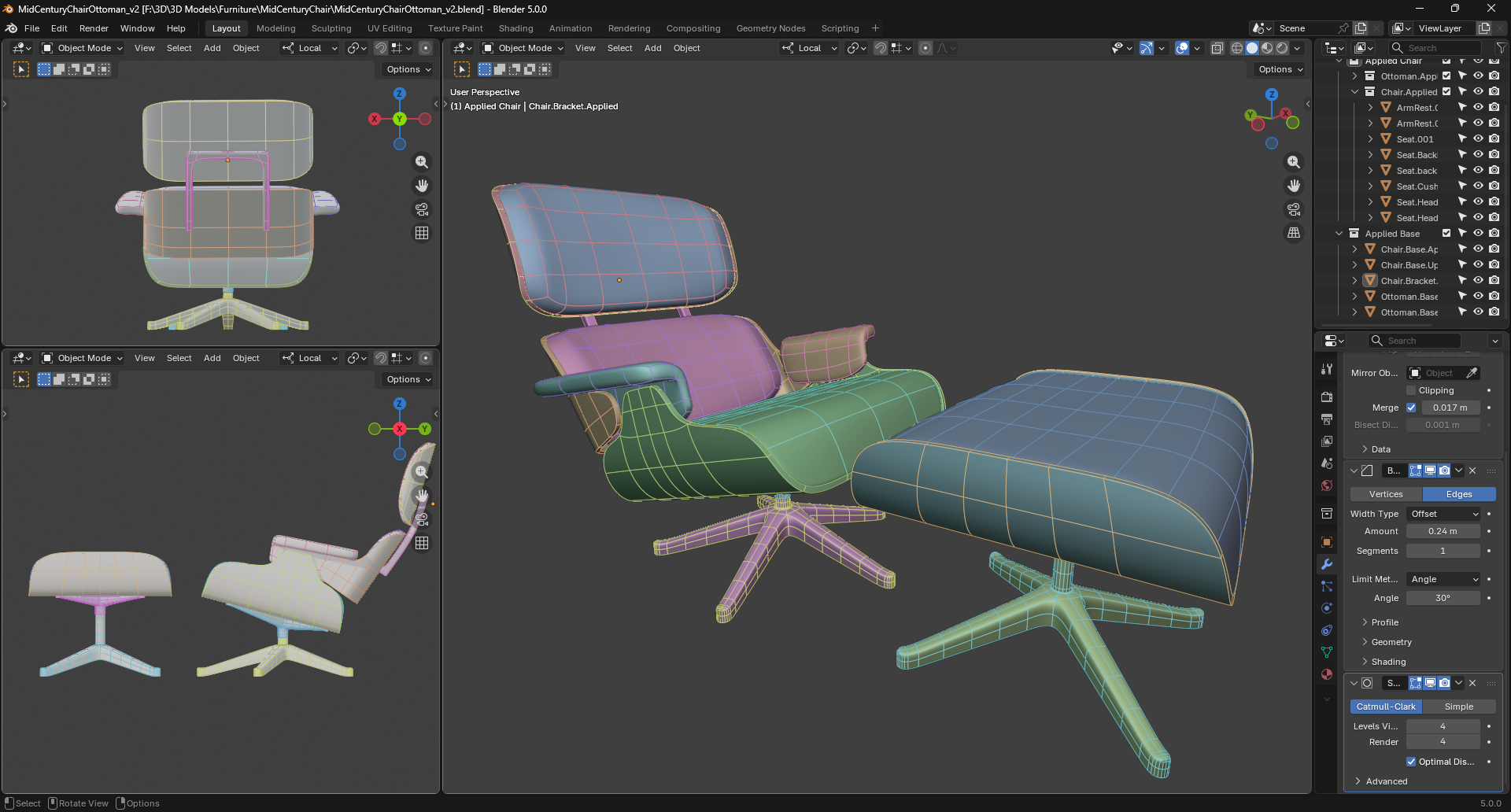
- Mesh Resolution vs. Speed: Simulation run on low-resolution cage meshes, then subdivided with deformation applied as shape keys.
- Seam Wrinkles: Manual vertex weight painting along stitch lines gave precise control over tension.
- Cushion Interaction: Multi-layer collision groups ensured proper stacking and realistic compression.
This project demonstrates deep understanding of physics solvers, production workflows, and material creation — all built from the ground up using industry-standard techniques. Fully production-ready, built for iteration and integration into any professional pipeline.
Behind the Process
Simulation Development
The sequence above shows the iterative process of tuning Blender's cloth physics. Early simulations focused on establishing base pressure and collision, while later iterations refined seam constraints and material properties to achieve realistic leather behavior.
Texturing Pipeline
Custom materials built procedurally in Substance Designer—chenille upholstery and wood veneer from scratch—then detailed in Substance Painter using UDIM tiles and ID maps for precise wear placement.
Wireframe & Simulation Cage
The simulation was run on low-resolution cage meshes (visible below) to optimize performance, with final detail applied via subdivision and shape keys. This approach maintained simulation accuracy while achieving high-resolution final renders.